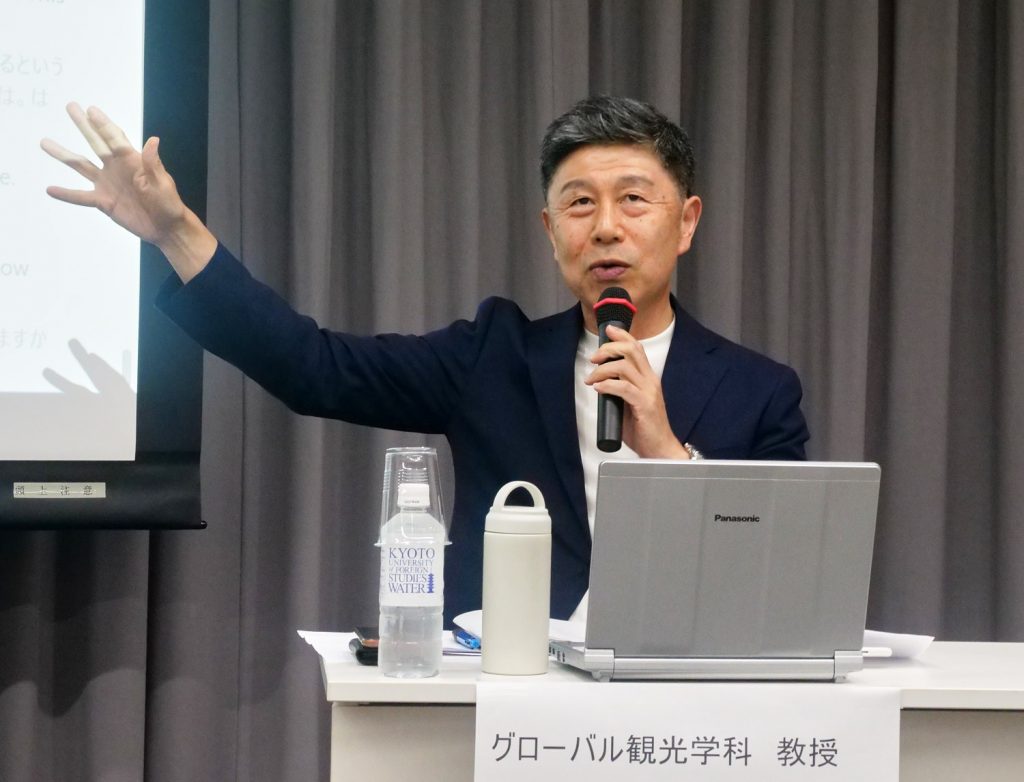
Toshihiko Goto, a professor of global tourism at Kyoto University of Foreign Studies, said tourism should be better distributed in Kyoto. /Photo by Andrew Smith
Text by Josephine Bowman
Photos by Andrew Smith and Anthony Clauson
Tourists in Kyoto don’t need to be stopped; they need to be dispersed, according to tourism experts at a recent discussion held at Kyoto University of Foreign Studies.
Overtourism is when visitors gather and concentrate in specific places, putting a burden on locals, said Toshihiko Goto, a global tourism professor at KUFS, during an overtourism panel discussion held on June 5. He believes the dispersal of tourists is “essential for sustainable tourism.”
The city of Kyoto currently sees 60 million tourists annually. Surging in the spring, the number of tourists has increased by 50% over the last 50 years, according to Takuya Horie, the chief marketing officer of the Kyoto City Tourism Association.
The large number of tourists is not the problem in itself, the panelists agreed. But they contribute to trash littering the streets and buses being packed.
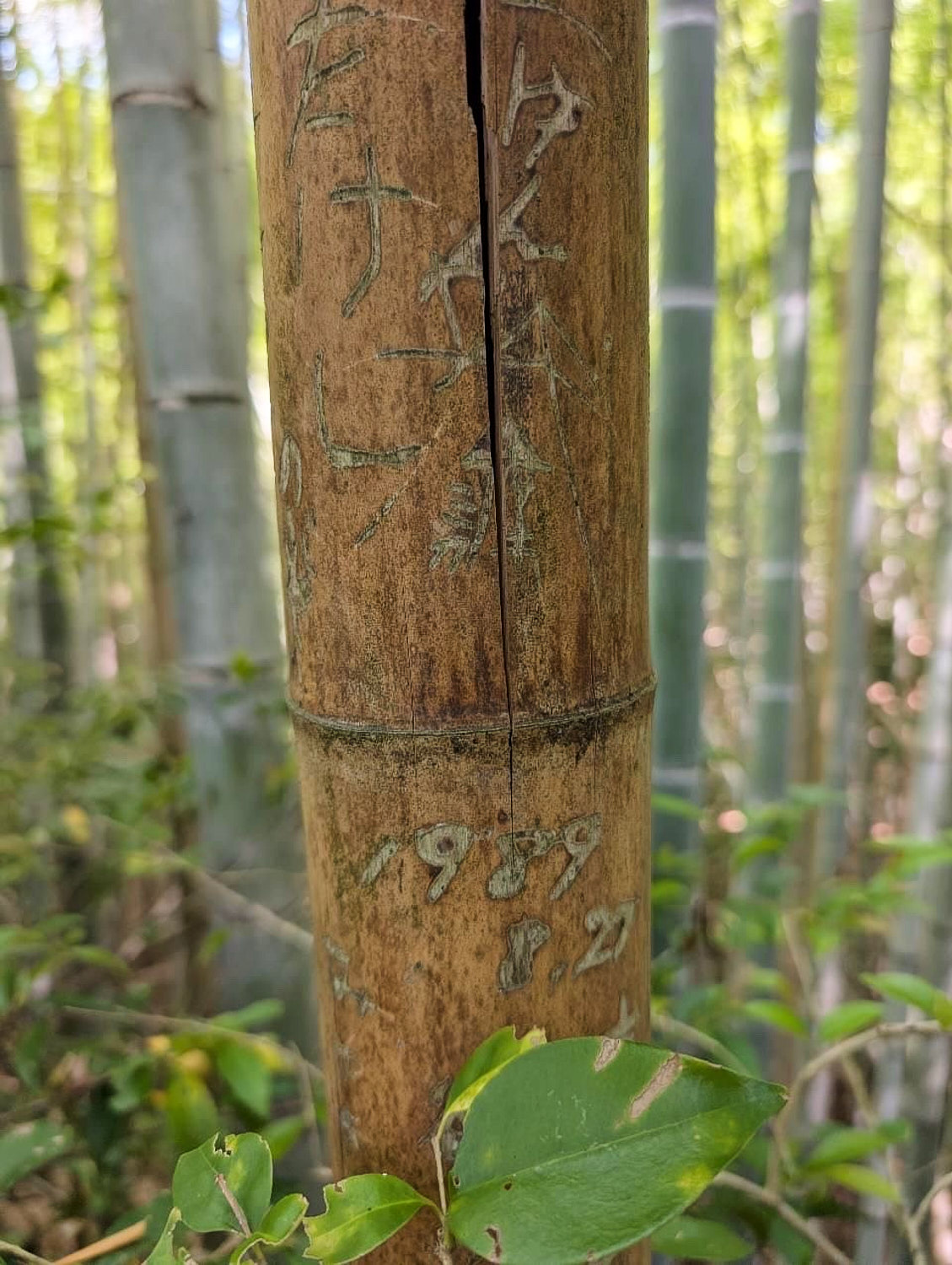
There has also been a long-term trend of tourists carving their initials or the year visited into bamboo in forests. The city places green tape over the bamboo graffiti to maintain a pleasant sight and discourage other tourists from doing the same, said Kazuki Hara, panelist and professor of tourism studies at KUFS.
While tourists need to learn the manners of Kyoto, it is equally important for Kyoto locals to understand the need for tourism, said Horie.
Tourists are charged an accommodation tax after lodging in most hotels in Japan. Kyoto has the highest accommodation tax in Japan. The tax increased in Kyoto this March to as high as 10,000 yen ($63) for the highest priced hotels.
The tax funds not only the promotion of tourism, but also urban development that benefits residents, according to Kyoto Travel, a joint publication of Kyoto City and the Kyoto City Tourism Association.
The city gets 39 billion yen ($244 million) in tax revenue from the 1.2 trillion yen ($7.5 billion) tourism business, the publication reported.
But, support from accommodation taxes isn’t enough. Many Kyoto sites cannot accommodate the number of tourists wanting to explore them, the panelists said.
Originally, Kyoto invited tourists. However, the capacity to embrace the number of visitors received wasn’t properly planned, according to Kunimitsu Imai, Kyoto’s chief global policy officer. In an interview with ieiMedia, he agreed that dispersing tourists and widening Kyoto’s capacity is the goal. Unfortunately, he admitted, it cannot be done in a short period of time.
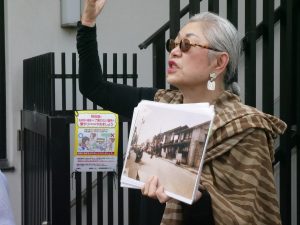
On the discussion panel, Rica Nakajima, a photojournalist and tour guide, said she also supported spreading tourists to different places. She guides groups to film locations and local shops. There needs to be a “rediscovery of its [tourism’s] appeal,” for locals, she said.
The future of overtourism is in the hands of locals and tourists alike, said Imai, as together they make Kyoto a “global city, unlike any other in the world.”
Interpretation for the panel discussion was provided by Verna Diaz, Riko Matsuda, Manami Hashimoto, Luna Saito, Yayoi Hayada, Nana Miyake, Yuyu Nakatsu, Kirara Yumoto, Hiyori Tominaga, Misaki Fujii, Haruka Kariyama, Sota Ito, Iori Watanabe, and Koki Muto. Interpretation for Kunimitsu Imai was provided by Sota Itoh and Lori Watanabe.