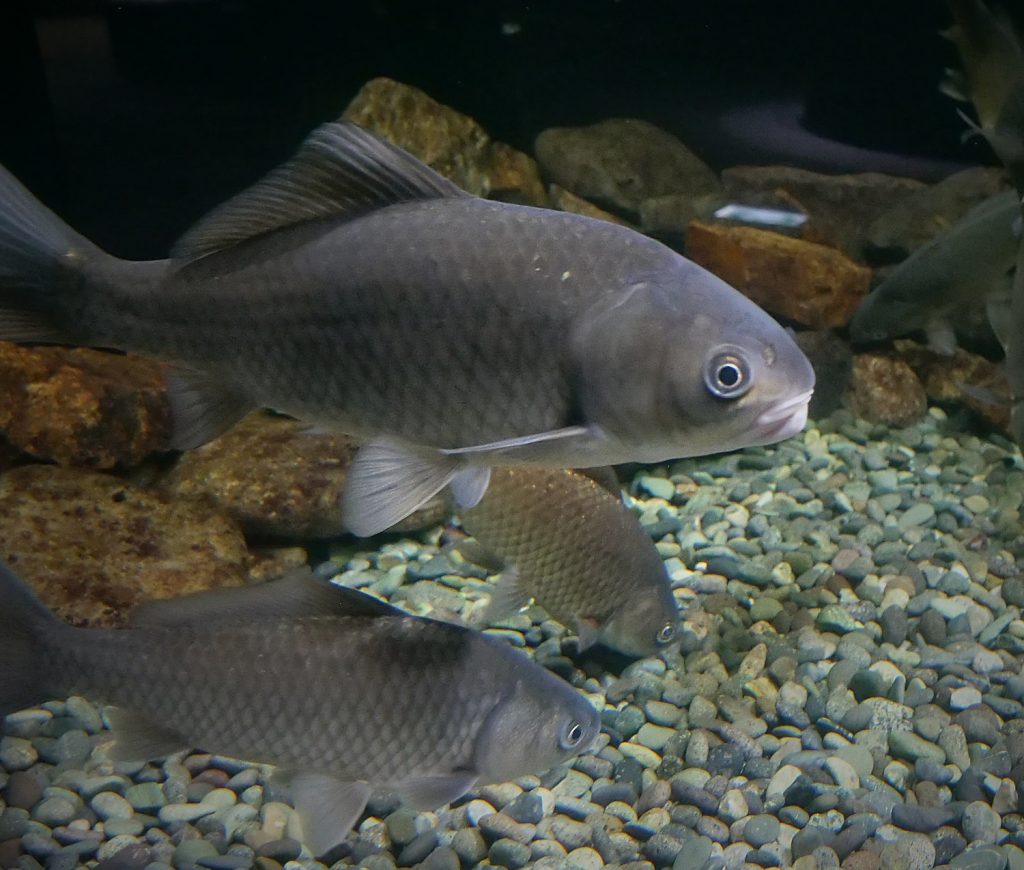
Fully grown nigoro-buna are on display at the Lake Biwa Museum in Shiga Prefecture.
Story and photos by Andrew Smith
Interpretation and translation by Verna Diaz
Shintarou Uchida’s family opened Sakamoto-ya in Otsu, Shiga Prefecture, in 1869, selling funazushi, a fermented delicacy considered the world’s oldest form of sushi. Today, the fate of the family’s centuries-old craft rests on the survival of a fish found nowhere else in the world.
“My grandfather used to say I would have to find a normal company and become a salaryman,” said Uchida.
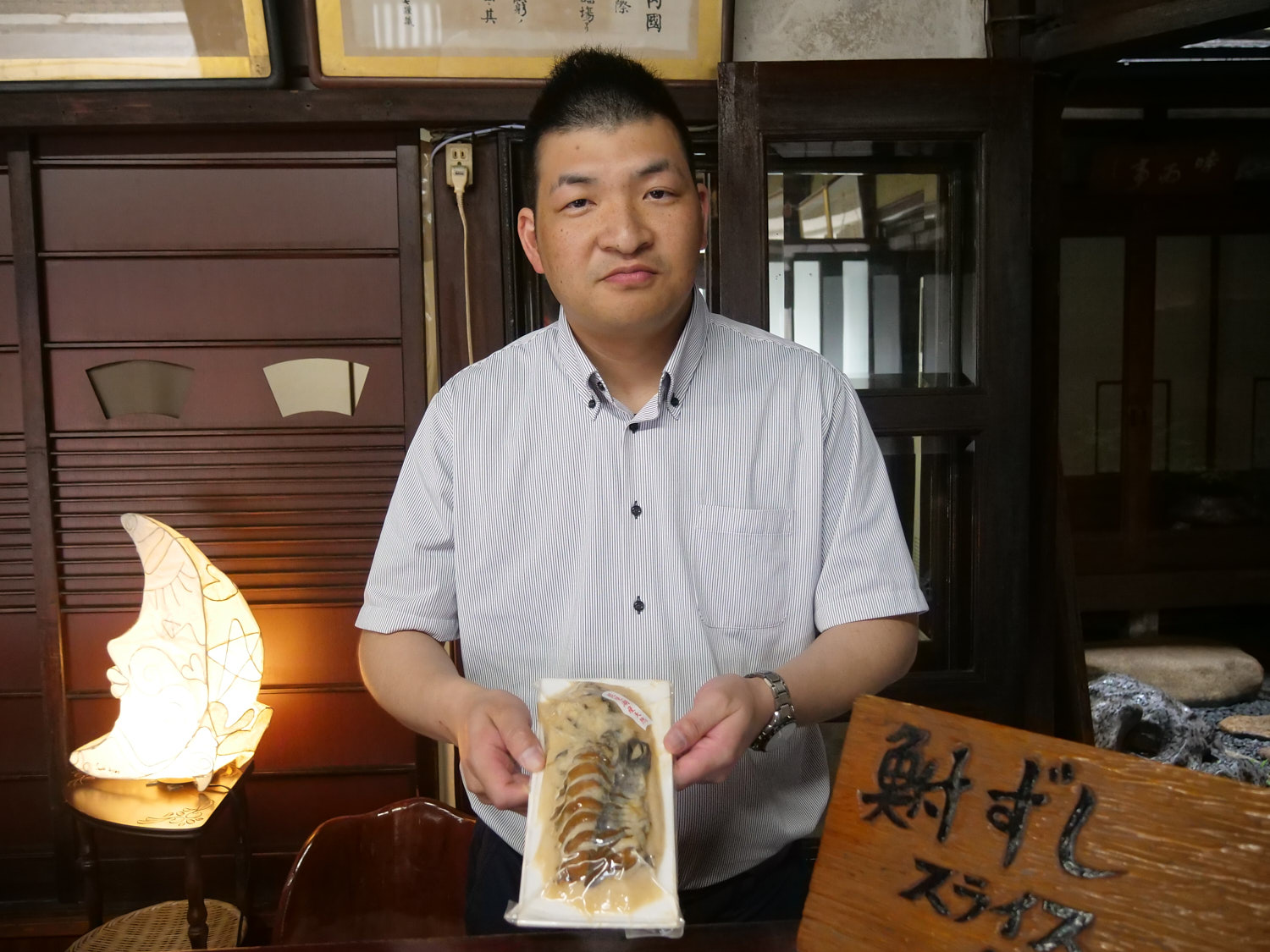
Communities near Lake Biwa in Shiga prefecture have preserved crucian carp into funazushi for over a thousand years. As the only fish it depends on faces near-extinction, so too may one of Japan’s oldest culinary traditions.
The sole fish suitable for making funazushi is the nigoro-buna, which is only found in Lake Biwa, Japan’s biggest lake. Their numbers have declined severely in the past few decades, leaving Lake Biwa communities faced with a difficult decision – save the fish or lose the tradition.
Funazushi, which can be traced back to the year 927, has been a staple of Shiga Prefecture cuisine, for generations. Traditionally, it’s made by fermenting nigoro-buna in salt and then packing it in layers of rice in a year-long process. The delicacy has a distinctive sour, salty taste.
Nigoro-buna’s fat distribution, bone density and plankton diet create just the right conditions for making funazushi.
Unlike most modern sushi, funazushi is a shelf-stable food due to its fermentation. When it was first developed, fish could not be preserved through means of freezing or refrigeration.
When the nigoro-buna first started disappearing around 1990, the cost of the fish went up. Uchida’s father and grandfather began searching for a replacement fish to make funazushi, traveling across different parts of Japan and even to China.
“We couldn’t find a fish anywhere that could produce funazushi like nigoro-buna,” said Uchida. “Rather than using a different fish, we would have to close down instead.”
At its peak in 1988, about 200 tons of nigoro-buna were caught from Lake Biwa, according to the Shiga Prefecture’s website. By 2010, fishers only caught around 25 tons annually.
The near-extinction of nigoro-buna, explained Shouhei Yamashita, the chief engineer at the Shiga Prefecture’s Fisheries Management Division, is largely attributed to invasive species in Lake Biwa that eat the fish as babies, as well as environmental changes and pollution.
The large-mouth bass was first spotted on a Lake Biwa shore in 1974, according to the Fisheries Management Division. By 1979, they had spread throughout the whole lake and became densely populated by 1983.
Around the same time, the bluegill also began populating in Lake Biwa, becoming widespread by 1993.
Brought to Japan from the Americas for sport fishing and food, the two invasive fish are a primary reason behind the nigoro-buna’s decline, according to Terai Akihito, a senior analyst at the Lake Biwa Museum.
“The fish are only eating them (nigoro-buna) to survive,” he said. “Even though they’re invasive, it’s not their fault they were brought here.”
Another main reason for the fish’s decline is the rapid change in water levels due to the dams around Kyoto city and Shiga prefecture such as the Eigenji dam.
The nigoro-buna are known to lay their eggs in a reed called yoshitai, which grows in shallow parts of Lake Biwa by the shores, now slowly being replaced by developing infrastructure. When the water level drops too fast below the eggs, they dry out and die.
In recent years, the Japanese government has started regulating Shiga Prefecture dams to release water slowly during the fish’s mating season April to June, so the eggs can hatch safely.
Shiga Prefecture’s Fisheries Management Division marks baby nigoro-buna raised in captivity outside of Lake Biwa before releasing them back into the lake. According to their website, in 1997, almost every nigoro-buna fished up in the lake was marked, meaning nearly all wild nigoro-bunas were drying up as eggs or being eaten as babies.
Due to efforts by Shiga Prefecture and community members, the nigoro-buna population has been steadily rising since 2010. As a result, in 2023, about a quarter of caught nigoro-buna were marked, with the rest being born naturally in Lake Biwa.
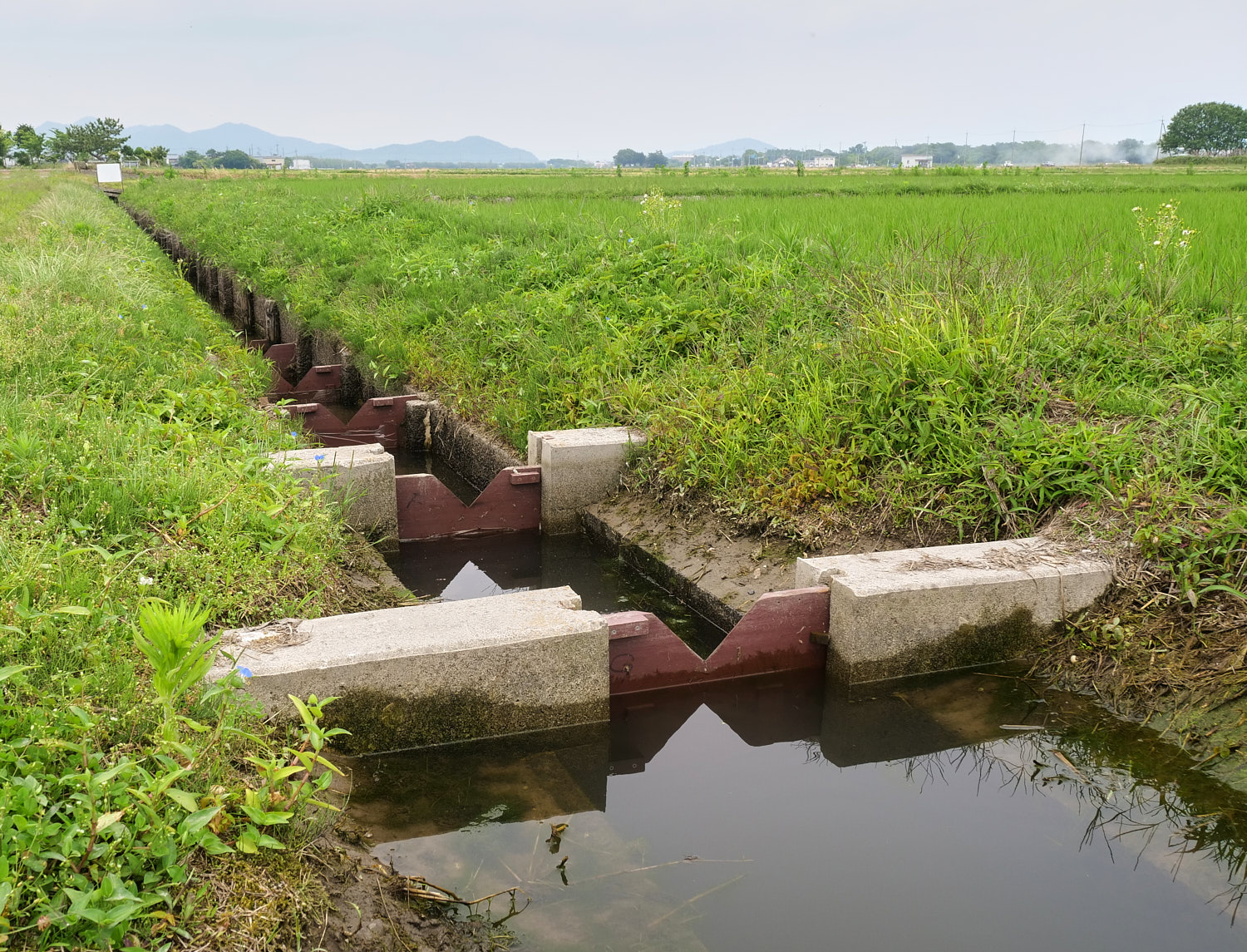
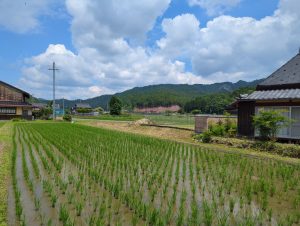
Among these efforts is a Shiga Prefecture project started in 2001 called the fish cradle paddy field project, which aims to provide nigoro-buna a safe place to lay their eggs and grow as babies.
The project uses rice fields close to Lake Biwa as fish sanctuaries, with fish ladders in drainage canals, or water roads called suiro allowing for nigoro-buna to swim up from the lake and jump into the rice fields.
The Fisheries Management Division said 8 million to 10 million nigoro-buna are released into the lake from these farms, which are warm and rich in plankton the fish naturally eat.
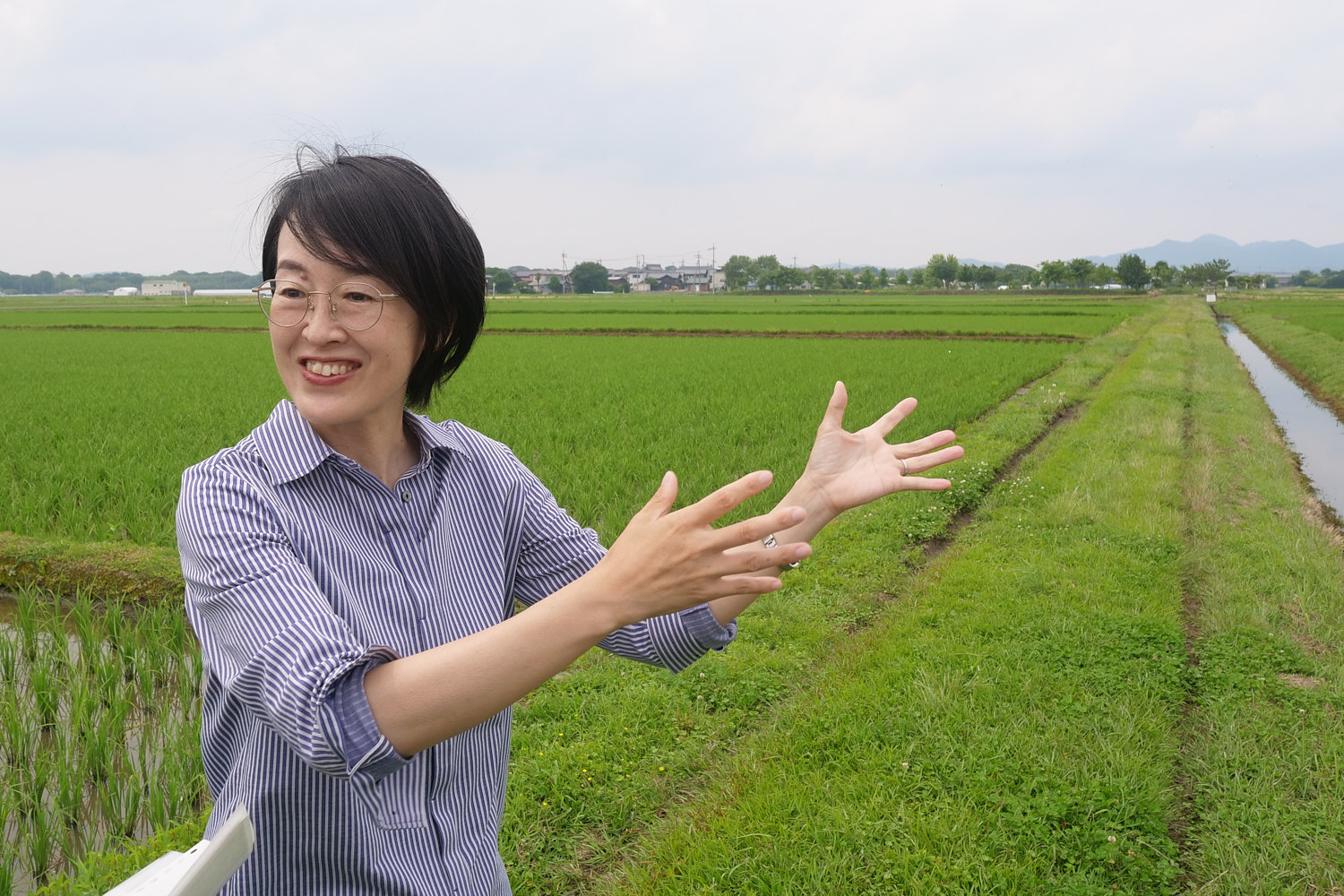
Akiko Minagawa, an associate professor at Shiga Prefectural University who participated in the project for over a decade, said these fish cradles are designed to only allow native fish to enter the Suiro.
”The water flows out to Lake Biwa,” said Minagawa. “Invasive species don’t swim upstream like native fish do.”
Shiga Prefecture encourages fishermen to catch invasive fish like the bluegill and large-mouth bass as part of a paid program to reduce their numbers. The caught fish are then sold to manufacturers to grind up into fish powder.
Shiga’s prefectural government has also developed artificial yoshitai reed beds, fenced off to block trash and pollution, on raised ground in Lake Biwa that adapts to water level fluctuation to serve as spawning grounds for nigoro-buna.
For Uchida, restoring the population of the nigoro-buna, however, is not enough to bring back the tradition of funazushi.
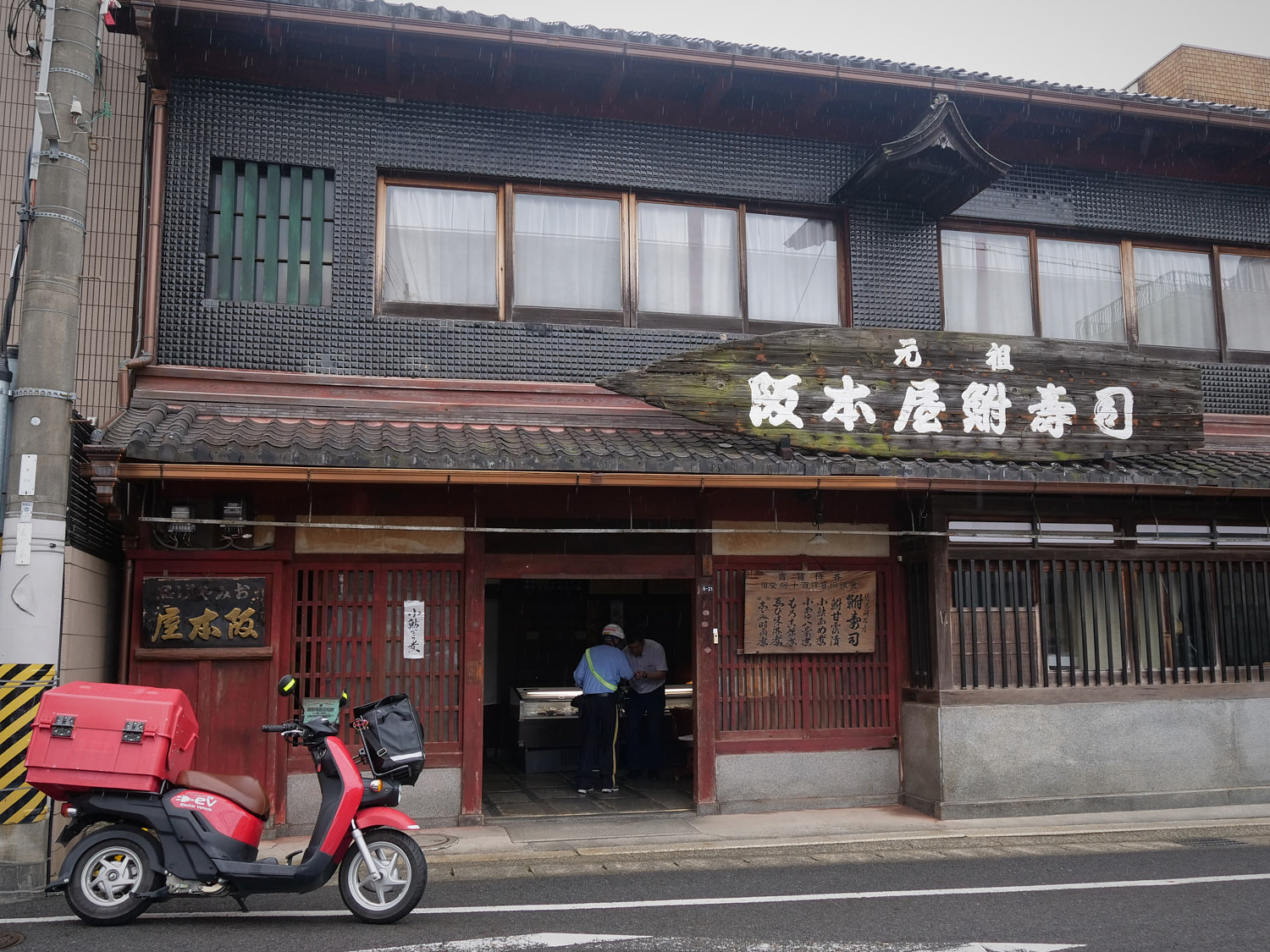
“We sell to regulars from Shiga and nearby prefectures, but most of them are older generation,” said Uchida. “Nowadays there are more trendy foods that young people like.”
Due to the traditional fermentation process, funazushi has a unique fishy, pungent taste that may be unappealing to many modern consumers.
To counteract this, some funazushi sellers have been trying to adapt the dish to be more suitable for contemporary tastes.
Yoshinori Mori, the head representative of Funa Tomi Suisan, a funazushi manufacturer in Hikone, Shiga Prefecture, is one of the fishermen taking part in those efforts.
”We tried modern methods like draining the blood right after catching it,” said Mori. “Doing so lessens the fishy taste and makes it easier to eat.”
According to Mori, sales have increased as a result of this change.
People from all over Japan travel to Shiga to eat funazushi, he explained. Once it’s fermented, it can safely be sold year-round.
To promote funazushi, the Shiga Prefectural Federation of Fisheries Cooperative Association hosts funazushi-making classes for the general public in fishery centers around Shiga.
Despite the recent efforts, the outlook for Sakamoto-ya’s business is uncertain, according to Uchida.
“The nigoro-buna are slowly coming back,” he said, “but it’s too unpredictable to guarantee a future for the tradition and the store.”