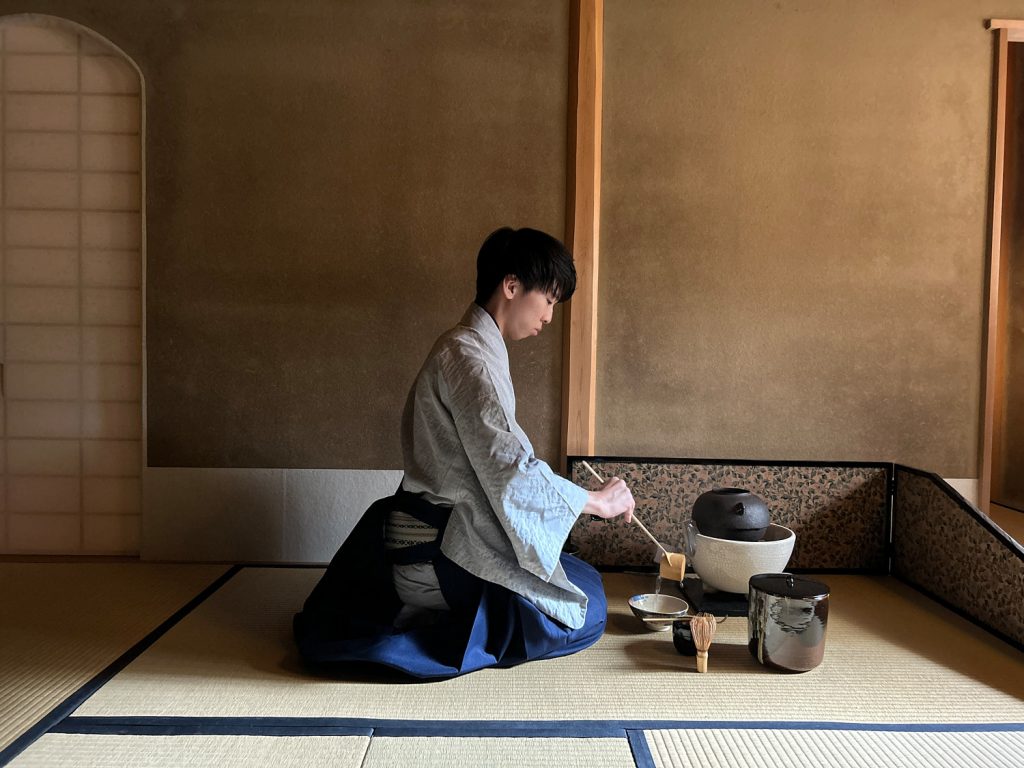
Takaki Tada cleans a chawan with boiling water, initiating a traditional tea ceremony at Onishi Tsune Shoten in Kyoto.
Text and photos by Ángeles Maku
Interpretation by Manami Hashimoto and Yayoi Hayata
I was desperate for a caffeine fix to remedy my sleepless hours after a long flight to Japan, and it wasn’t long before I found one. Coaxing me with its green tint was a bright advertisement for powdered green tea. Naturally, I gave in. As an avid matcha drinker, I had high expectations for Japanese matcha; swiftly, I was disappointed by a distinctive flavor I couldn’t place. It was matcha, sure, but … different from what I’d grown accustomed to in the United States. Sip after sip from local tea shops presented me with this same diluted flavor.
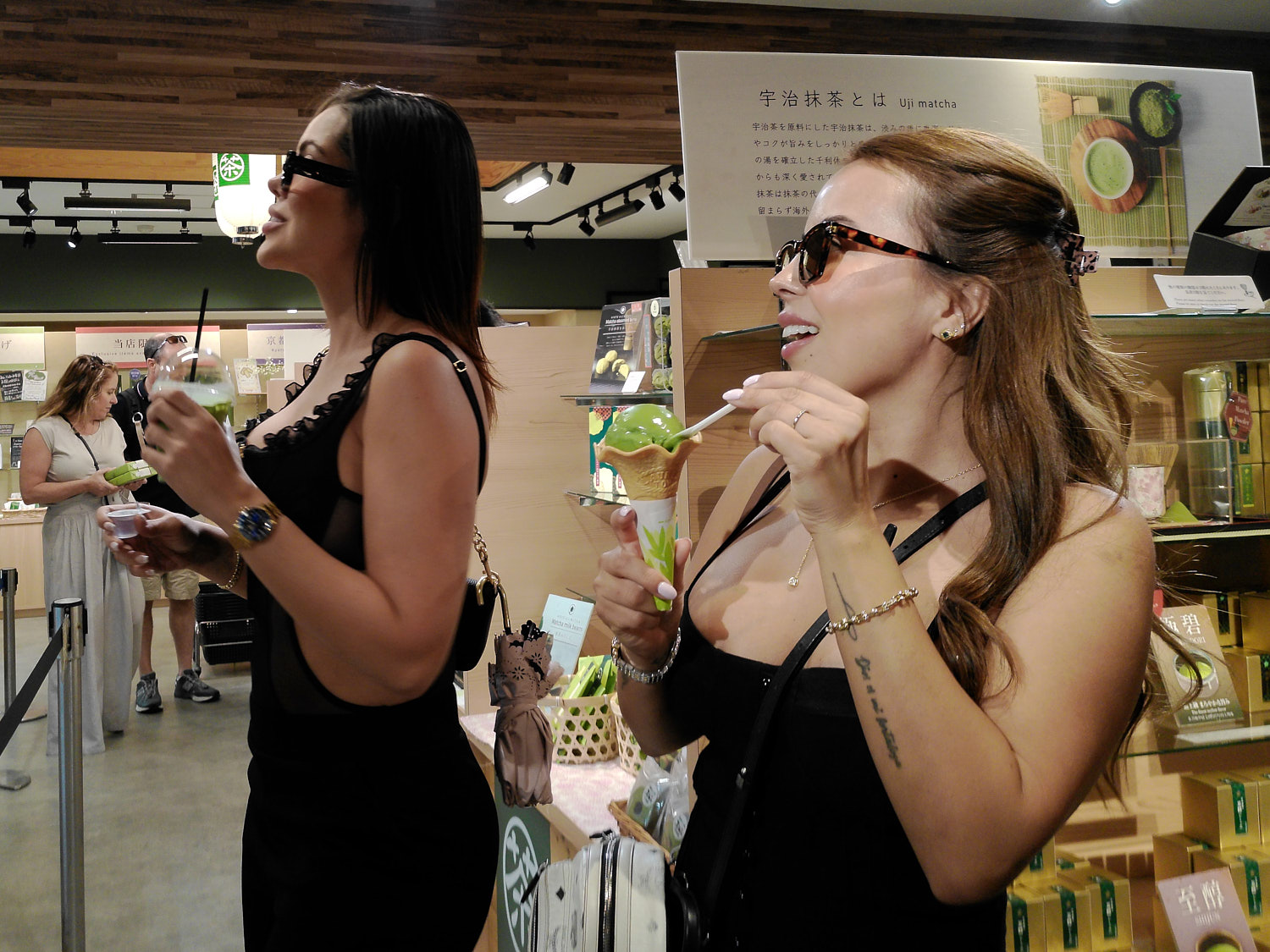
While consumption of matcha has spiked in recent years, the reason for the mass appeal is hard to pinpoint. Some enjoy its benefits compared to other caffeinated drinks, some are trying it because it’s trendy, while others engage with matcha as a deep-rooted tradition. The global height of matcha consumerism has resulted in the locally grown leaves becoming rare in many Japanese shops.
Although matcha has its origins in China, the Buddhist monk Myōan Eisai brought the tea to Japan in the 12th century. Only 10 miles away from Kenninji Temple, founded by Eisai, 43-year-old Mamoru Ogawa whisks powdered green tea with a bamboo chasen in a chawan bowl. Ogawa is the owner of Otya to Haru, a cafe in the Gion district of Kyoto, specializing in matcha and hosting tea ceremonies. As customers order, Ogawa quickly provides drinks one by one, staffing the cafe solo.
Ogawa pursued the path of matcha with a deep love for its history. Otya to Haru maintains a product exclusively cultivated in the prime green-tea growing region, Uji, despite rising costs following large-scale global export of Japanese matcha.
Kyo ha Matcha de Kimeru, another matcha shop in Gion, offers three different grades of matcha for a latte. Each of the three grades presents the same strong green tint, yet has a notably different taste. The highest grade is most similar to the matcha I had tried in the United States. The cafe solely sources its product from Uji, and employees Yuzu Masubuchi and Rio Morimura commented on the rising cost of local powdered green tea amid rising demand.
Gion, a tourist-heavy area in Kyoto, has matcha-themed products in every other shop – transforming the flavor into a symbol of Kyoto, and a souvenir for foreign and Japanese tourists alike. Nineteen-year-old Nicholas Dam, a full-time barista at Nagomi cafe in San Francisco’s Financial District, said that several of his friends had traveled to Japan specifically for matcha, finding themselves disappointed by the contrast to what they had grown accustomed to in the United States.
Ogawa notes that many chain cafes and tourist-heavy shops in Japan have begun to import their matcha from China and other countries to continue business while facing the rising expense of the previously convenient local tea. It has become increasingly rare to come across shops like Ogawa’s and Kyo ha Matcha de Kimeru that do not import their tea from abroad or use diluted products to keep up with the growing market.
“The Uji matcha we use here — it’s getting twice [as expensive],” said Nao Fujimoto, a Kyo-machiya guide at Onishi Tsune Shoten. The over-150-year-old townhouse now serves as a shop for handheld fans, as well as a venue for hosting tea ceremonies. Fujimoto spoke about the decrease in Japanese customers attending their tea ceremonies, coinciding with an increase in the foreign customer base. Currently, matcha is no longer an exclusive ingredient. It is now a worldwide commodity, sold at various cafes in premade batches over iced milk.
Takaki Tada hosts tea ceremonies at Onishi Tsune Shoten. “Here, the tea ceremony is one of the big [parts] of Japanese culture,” said Tada. “I want to keep this culture going.” He noted the increased difficulty in procuring domestic product for the machiya.
Nagomi, the San Francisco cafe, sources its matcha from Shizuoka Prefecture in Japan, the hometown of the shop’s owner. “We always hand-whisk each drink; it creates a smooth and foamy consistency that really draws customers in,” said Dam. San Francisco has many competing matcha-centric cafes, with Nagomi being one of the few intent on the meditative preparation, despite a consistent queue of customers crowding the entrance.
“We’ve received multiple offers at our store of matcha sourced from China,” said Dam. Yet the store insists on the pricier Japanese ingredient for their products.
Many of the employees, shop owners and tea masters I spoke with in Kyoto said they appreciated the global interest in Japanese tea, but they said the commodification of a time-honored custom has left many Japanese people disillusioned with the matcha surge.
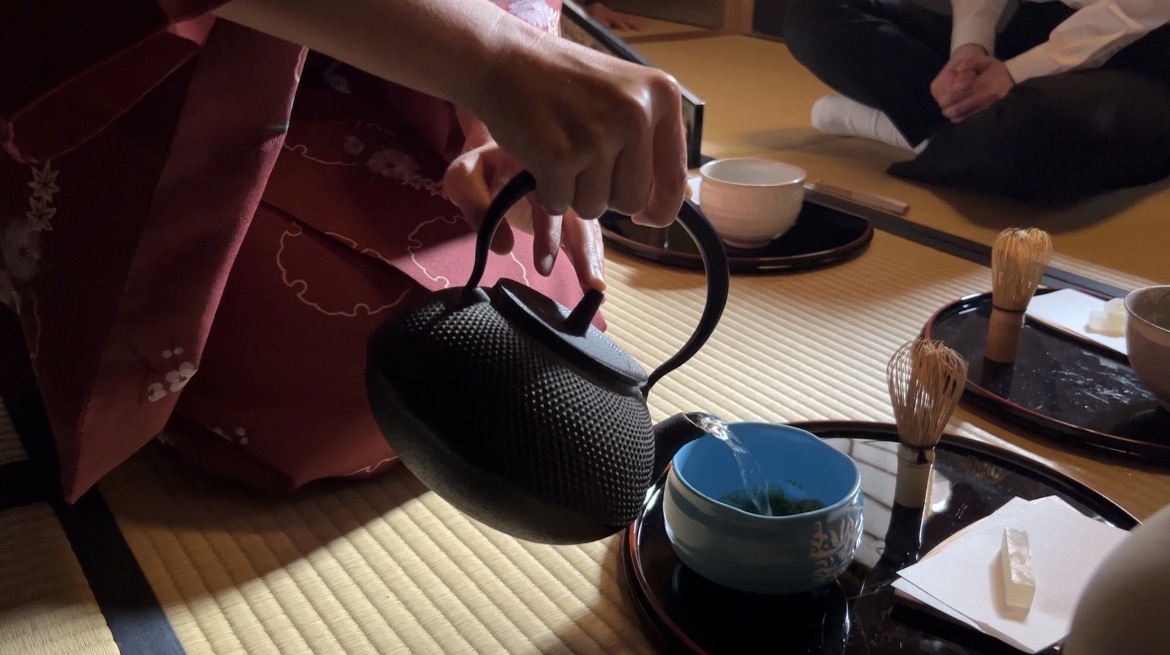
Fujimoto and Tada spoke of their desire to combine the interest in matcha with authentic tea ceremonies to educate the public about this special practice. “This is a part of our culture, but it’s getting harder — consumers want to get the matcha, but we have to use it for the ceremony. [Finding] a balance is kind of difficult,” said Fujimoto.
Behind each cup of this tea, there is a history of cultivation, preparation, and exportation. While this trend may rise or fall, the tradition behind it will always carry a deep significance for the people of Kyoto.