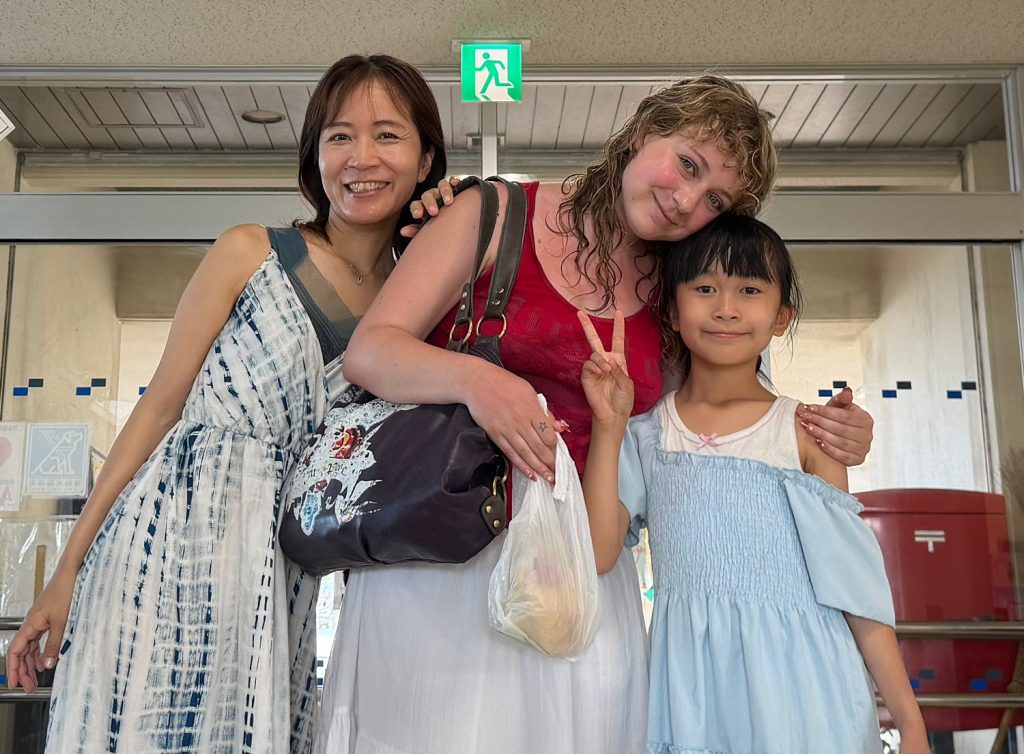
From left to right, Aoi, Emma Cooney, and Sumi stand at the Taketomi ferry port, at the end of their trip together. Photo courtesy of Emma Cooney
Text and photos by Emma Cooney
Content warning: This article contains discussion of suicide. See resources at the bottom of the article.
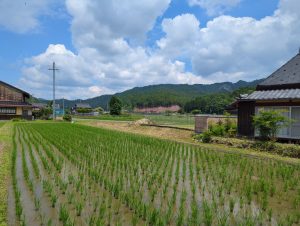
On the Japanese island of Taketomi, Aoi and I stand quietly on a small hill, in the presence of six gods, whispering about our mothers. Looking out at a collection of shrines, we are blinded by a harsh Japanese summer sun reflecting off the ocean.
We had met just one day before on an airplane traveling from Naha to Ishigaki. I was traveling there to swim and eat soba while she was making her semi-annual spiritual excursion to the remote island.
After I boarded the plane, I found my seat, 15A, and awkwardly climbed my way over what appeared to be a mother and daughter to get to my spot by the window. Feeling like a newborn stumbling my way through unfamiliar consonances and reaching dumbly for words beyond my grasp, I attempted a conversation with my seatmates. It became apparent I was nowhere near fluent in Japanese, so the mother spoke to me in English, revealing she had learned the language as a stewardess working in America.
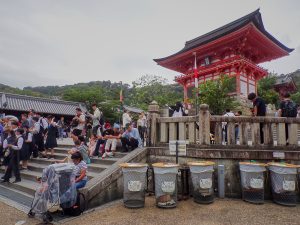
I told her about my upcoming journalism program in Kyoto. She said she used to love traveling to Kyoto to pray, but as the quietness of COVID-19 wore off, and thousands of tourists poured into the city, it became too crowded for her. So, twice a year, she and her daughter take two flights and a ferry ride to the remote island of Taketomi to reconnect with the gods they feel disconnected from at their home in Tokyo.
Once we landed, they invited me to visit them during their stay on Taketomi. Knowing this was a rare opportunity, I canceled the snorkeling trip I had booked and agreed to see them.
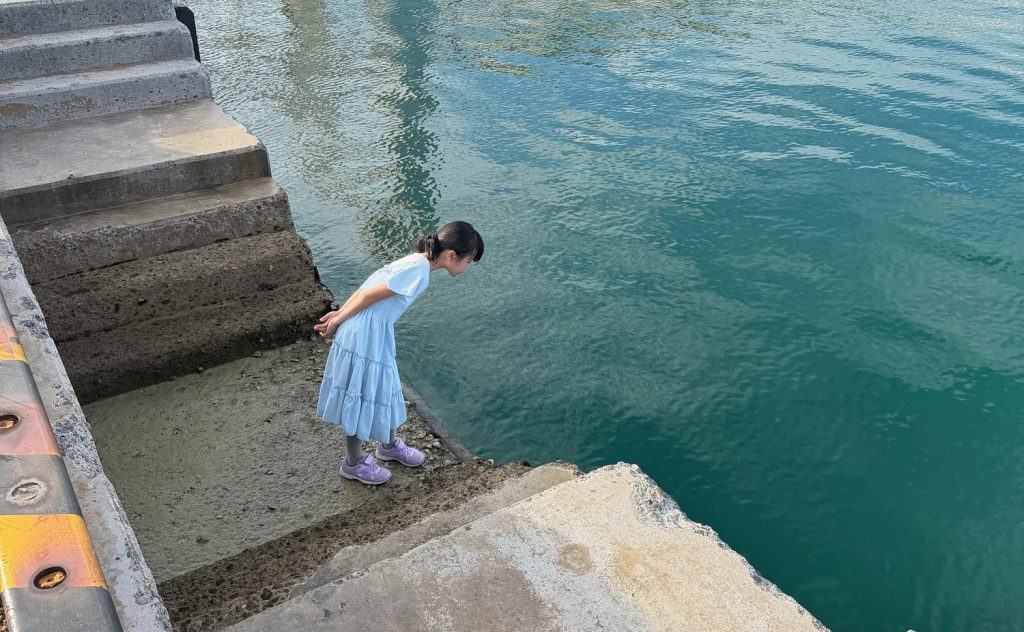
The next day, Aoi and 9-year-old Sumi picked me up from the only port on the island, where one ferry came every hour from Ishigaki. Walking through the gravel streets, we passed a multitude of water buffalo and cows, lapping water that trickled down from fields abloom with torii gates.
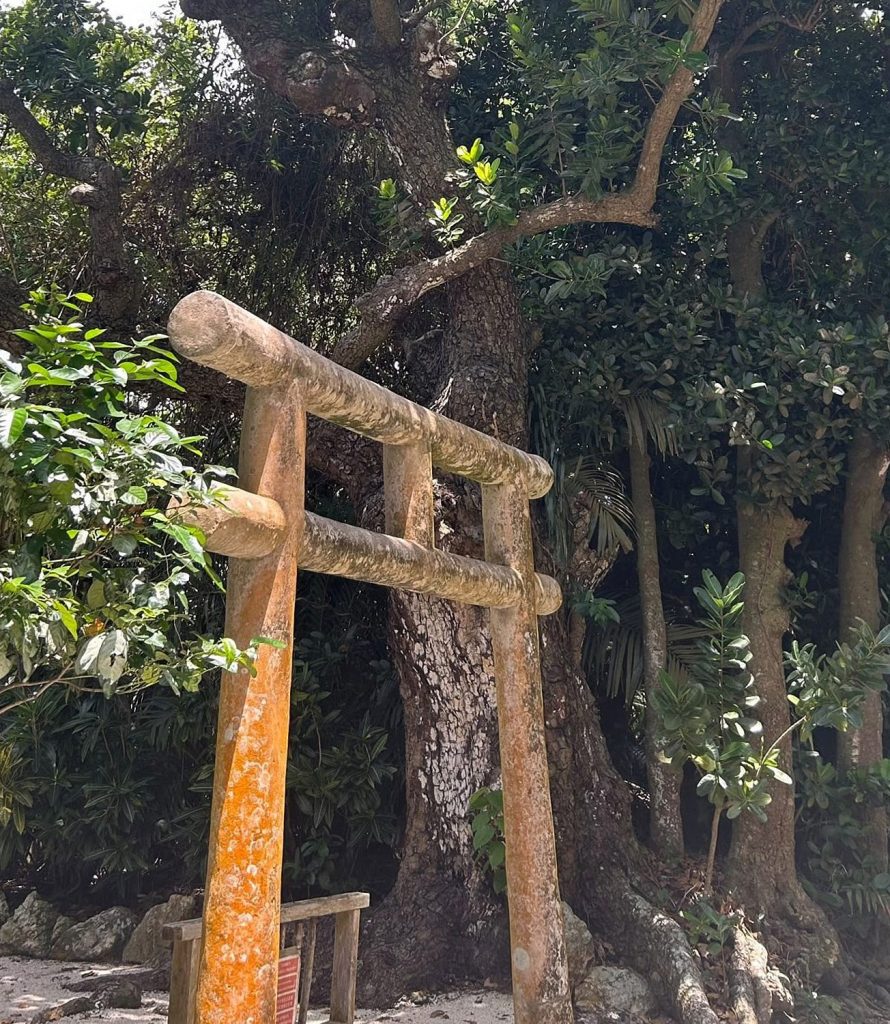
Aoi explained that Taketomi had so many gods living on it that there were 30 sacred groves (utaki). Trees, ancient and broad, loomed over the gateways, which were unpainted and barely distinguishable from the surrounding woods.
Taketomi is closer to Taiwan than mainland Japan. Seeking a respite from the Philippine Sea’s heat, we settled in their air-conditioned room. Sunburnt and dehydrated, Aoi and I sat on the couch together, while Sumi hand-fed me the chips I had bought her from a small shop.
After Sumi had left to catch butterflies in the garden with her mushitori ami, or insect-collecting net, I explained to Aoi that the catalyst for my solo travel was my mother’s death. Aoi then told me her mother and brother had both passed as well.
She believed they were influenced by the Japanese countryside’s depopulation. Her mother and brother committed double-suicide in their rural village after growing more isolated and depressed as people they knew, including Aoi, continued to leave and move to big cities.
As we talked, we realized that our mothers had both ended their lives by drowning just one year apart. While sharing this, she was not sad, nor distraught; in fact, she felt a sense of wonder at our shared experience, believing it was fate.
A week before flying to Ishigaki, Aoi had a dream in which a woman veiled in gold light told her to leave for Taketomi earlier, saying she needed to experience something important. Although Aoi didn’t understand what that meant, she decided to change her flight; that is how we ended up sitting together on row 15.
Where I saw coincidences, Aoi saw the hands of the six deities on Taketomi. “I was able to meet you through the power of the universe,” she told me.
While my dad raised me agnostic, my mother was a devout Christian. But religion and spirituality always made me feel uncomfortable. All I could think of was sitting awkwardly at my mom’s dinner table, not knowing the words to say during grace, and hanging my head low. Belief in God, gods, deities and spirits all reminded me of my mother dragging me by my sweaty hands to stuffy Florida churches, while I cried at the thought of God watching my every move.
But after talking to Aoi, I wasn’t uneasy when imagining a force beyond my comprehension. For the first time, the idea of gods existing felt comforting and like something wonderful.
As I return to the overcrowded streets of Kyoto, I find myself seeking out the most secluded shrines and temples.
Praying to gods I’m not sure I believe in, I still ring the bells to get their attention. And now, when I whisper about my mother, I say Aoi and Sumi’s names, too.
If you or someone you know is struggling with suicidal thoughts, consult these resources:
In Japan: https://telljp.com/lifeline/
In the United States: https://988lifeline.org/